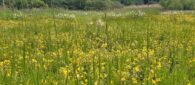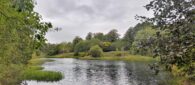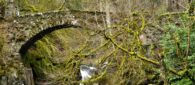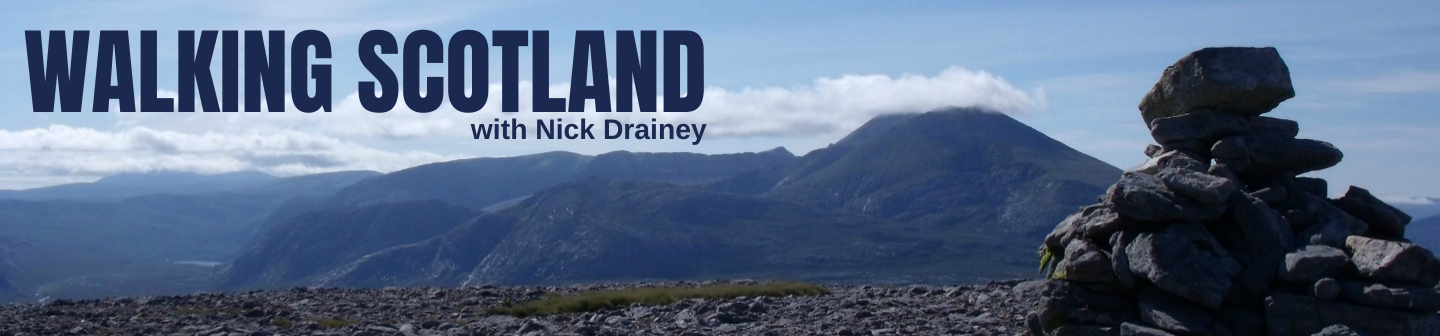

Scotland’s landscapes are praised across the world, a hugely important environmental resource and the most vital part of the tourism industry which helps power the country’s economy.
So why does the current Scottish Government prefer to look the other way? It has just finished a consultation on the National Planning Framework but in the draft proposals wild land is not identified as being a “nationally important asset”.
The Scottish Wild Land Group has found that our precious landscapes and ecosystems are under threat because of increasing development on and near areas designated as “Wild Land”.
In its recent report The State of Wild Land in the Scottish Highlands it found planning decisions were inconsistent, allowing the ever-expanding number of wind turbines to increasingly impact (some would say ruin) the surrounding environment.
Wind turbines are good in the sense that they help reduce carbon emissions in the production of energy, and planting trees is a good thing as they trap carbon. But if the consequence of this is to damage the environment the developments are meant to protect it doesn’t seem to make sense.
The economy is often thrown in as a justification – we need a secure, clean energy supply and we need to invest for both environmental and economic reasons.
But if those developments start to put off visitors their overall aims will have failed. Visitors are important, whether from overseas or simply staycationers travelling from the Central Belt to the Highlands, because tourism accounts for around one in every 12 jobs in Scotland and has been described by the Scottish Government as a “cornerstone” of the economy.
The tourists come in large numbers to enjoy Scotland’s iconic landscapes so when there are warnings that they are under threat, we should take notice.
And this is not a new problem, it is something that should have been addressed a long time ago. In 2018, the then chief executive of the John Muir Trust Andrew Bachell told me: “This is a creeping industrialisation of bits of our landscape. In a sense the cause of the conflict is that there has never been, within Scottish Government, a policy of looking after our landscapes.
“The public interest in having landscapes well looked after should not have been something we had to campaign on case by case, it should have been a founding principle behind an industrial change. As a country we have sailed close to the wind.”
The Scottish Government now has a chance to do something positive and protect the wild land of Scotland. Let us hope it takes the chance and doesn’t continue to look the other way.