
The Edinburgh Natural History Society were recently kind enough to ask me to guide them on a walk around 38 hectares very close to my home, and my heart.
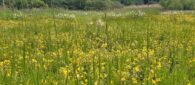
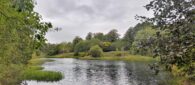
The biodiverse site on the edge of Linlithgow links heath land, woodland, a large pond (known locally as The Lagoon) and the River Avon.
It was once a sand quarry (until 2000) but has seen a large amount of re-wilding thanks to tree planting and I am part of a campaign to save it from housing developers who are being invited to buy it by the former quarriers. Learn more about that at our Facebook page – Green Battle Linlithgow.
So, with the forecast promising a fairly dry day, a dozen of us set off. After explaining the history of the site – which stretches back nearly 500 years as it was where the Battle of Linlithgow Bridge took place – I then made a plea to find a rare moth, beetle or plant that would stop any house building. It was a plea in hope rather than expectation because what I was really hoping to do was learn more about this place I have a deep affection for.
And right away I was learning; who knew how many insects live on plants, every single plant?
To say the walk was long would be wrong; the route I had chosen is one I have done many times and I would allow around an hour, and I think of myself as a relatively slow walker (it is the best way to see things).
By the standard of my companions however, I was an Olympic sprinter. Such was their dedication to study the plants and animals that the walk was to take close to five hours, but a really good five hours.
The Edinburgh Natural History Society says on its website: “Mosses, birds, insects, flowers, trees, sea-life, fungi, mammals and much more – we’ve got them covered.”
And importantly for me it adds: “Field trips are focussed on what is found on the day and there are generally a number of specialists to share their expertise. There is no fear in asking about the very common such as a daisy, you will also gain knowledge less commonly known.”
My big learning was how much life is on a tree. Those little balls, or bits of minute fungi are galls – and they might contain insects, bacteria, fungi or viruses.
Oak trees were a favourite place to see them – apparently, they can be home to wasps, and the oak apple gall is quite big and does look like an apple, making it easy to spot. But because of the other creatures and organisms it means that “normal” tree is home to more things than Edinburgh Zoo.
Slowing down is a great thing to do whether you are looking for a golden eagle or an aphid. Previously I would look in the middle distance to increase my chances of seeing birds or mammals but on this day I was crouching down and peering under leaves.
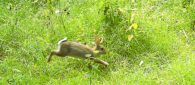
More than 100 species were recorded in total, from hoverflies to an unusual sedge (Carex spicata) to birds and mammals. But for me it was spending a long, time in one place that really fascinated me, allowing time to really explore everything, big and small.
I was sent a list of all the birds which had been seen and heard which probably really illustrates just how much nature there is in a relatively small place.
Birds seen: mute swan, mallard, moorhen, buzzard, magpie, carrion crow, jay, wood pigeon and robin
Birds heard: dabchick, chaffinch, willow warbler, blackcap, chiffchaff, treecreeper, wren, blackbird, song thrush, skylark and pheasant
As we made our way back to the promise of coffee at the end of the walk, I realised I had been well and truly educated. Obviously, I knew nature provides a rich, diverse and fascinating bounty to enjoy. But to have my eyes opened to this apparently never-ending array of life had been extraordinary, especially as much of it had been there all the time, it just took a group of enthusiasts to point it out to me.
Unfortunately, none of this actually helps stop housing development if a builder were to buy the land and apply for permission. It seems that some species are more important than others and some biodiversity is more important than others.
We will, however, continue our fight to save Linlithgow’s biggest accessible green and blue space for the benefit of the flora and fauna, as well as the walkers, cyclists, wild swimmers, anglers and nature lovers.
It would be nice to think that an area so biodiverse, which is loved and used by a range of people – both locals and those who travel to it from across the Central Belt – would be deserving of protection from those who come up with rules and regulations. That may be viewed by “pen pushers” and some large companies as a rather incongruous view but I believe it is how many people actually look at the world they live in, even the tiniest parts of it.