I have always been concerned about the need to protect the environment and preserve nature for the benefit of plants and wildlife, and sometimes humans.
But I never thought of myself as an eco-warrior, until now.
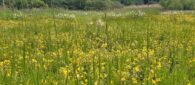
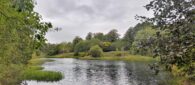
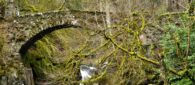
About 18 months ago my friend and I decided to launch a campaign to save a patch of land where we live in Linlithgow, West Lothian. It had been a sand quarry until 2000 and since then the owners, Cemex, had planted loads of trees which encouraged a good degree of re-wilding. Locals and visitors alike enjoy walking, cycling and swimming in a tree-fringed lagoon, created as a result of the quarrying. There is also the chance for bird-spotting while enjoying the banks of the River Avon.
However, Cemex have the land up for sale to property developers – despite the local council designating the land as not for housing, they were over-ruled by the Scottish Government (it seems the need for luxury housing supersedes nature).
We wanted to do something but didn’t like the idea of being a “proper” campaign, ie “constituted” with secretaries, board members etc. We just wanted to do our bit.
So, with the help of planning experts in the town, and the community council, we have prepared objections to stop any housebuilder bringing in the diggers.
But we are realistic and accept that will only delay the builders as the Scottish Government are usually on their side if they appeal a local decision.
So, we have brought in biodiversity experts from universities, and the council. This means we can collect the data needed to prove that the site is technically worthy of a designation which would stop buildings – a Local Nature Reserve would be great, if we find a great-crested newt, a Site of Special Scientific Interest would be even better.
We have the support of lots of people in the town, using social media to spread the word, and best of all – posters.
Another friend designed posters which it has been my task to put up around the town, inviting folk to download a QR code to an app where they can record all the brilliant things in nature you can see in Kettil’stoun Woodland, by the Avon Lagoon and down to the river. This data helps the scientists do their research, which in turn helps us prove the site deserves to be properly protected.
When your head is fuzzy and full of too much stuff at the end of a day’s work, going and doing something positive is a great antidote. And there is nothing better for me than putting up the posters.
It means I get to walk around the beautiful site, speak to people who stop to ask what I am doing (usually leaving them fully signed up to our aims) and have a feeling that I am “doing my bit”.
For me, being an eco-warrior is not about chaining myself to trees or causing disruption, it is about doing the best I can to help preserve nature for the benefit of all. And posters are the best bit.
Find out more about our campaign at our Facebook page
A version of this article first appeared in The Scots Magazine in July 2022 and a walk here appears in my latest book for Luath – highlandwalks
For just over 14 miles Loch Ericht lies nestled in a great gouge through the Grampian Mountains, created by a huge glacier retreating at the end of the Ice Age.
Other than Munro-baggers and climbers, however, it is largely unfrequented compared to other more “famous” lochs such as Ness, Lomond or Tay. It is though worth a visit for tranquillity amid some of the grandest scenery in the Highlands.
The first thing that strikes you as you reach its north eastern tip near Dalwhinnie is the great, looming mass of Ben Alder. This isolated mountain was used by Robert Louis Stevenson in Kidnapped when David Balfour and Alan Breck Stewart hid there. In real life it is said Bonnie Prince Charlie also used it as a place of refuge following the Battle of Culloden – as with the characters in the novel he was believed to have been helped by clan chief Cluny MacPherson.
Ben Alder is usually climbed in a two-day expedition involving much exertion. However, an exploration of the loch shore via a well-made track along the north west side can be as short or long as you like and with mountain bikes can be made longer. (But always remember that you have to come back as far as you have ventured.)
A good aim is the five miles to Ben Alder Lodge (so, ten miles there and back). But much closer – in fact it is only about an hour there and back on foot – is The Shieling, a kind of gatehouse to the Ben Alder Estate and a perfect destination for a family wander. Just above it is a picnic table at a great viewpoint which makes a brilliant stopping point for lunch. And the forest behind is ideal for a game of hide and seek, just don’t go too far uphill and get so hidden you become lost!
Note that the level crossing near Dalwhinnie Railway Station – typically used to access the loch – has been closed by Network Rail until further notice. A diversion is in place beginning from a track which starts along the road, next to the village’s petrol station. This leads down to the loch and bears right to reach the shore.
A version of this article appeared in The Scots Magazine in May 2022
Scotland has an amazing coastline and some of the most stunning beaches in the world – yes, the world. It might not be as warm as some places people jet off to but staycationers and visitors are treated to some wonderful stretches of sand, backed by rugged landscapes.
As a result, some places can get busy, especially in holiday periods, so it is always good to know of an out of the way place where the scenery is top class but the number of people is low. And remember, a beach in winter is a wonderful place when high winds and rough seas allow the wilder side of nature to be observed.
Lunan Bay on the coast of Angus is just such a place. It is a huge expanse of sand stretching two miles between low cliffs, backed by sand dunes and the ruins of a 12th century castle which was built to repel Norsemen. The invaders landed here in 1010 and went on to sack Dundee which led to the fortification being built for King William (the Lion) of Scotland. Things are more tranquil now but there are still plenty of activities to enjoy.
As with any beach, it is perfect for a visit with a bucket and spade and a bit of a paddle. Because of its size, there will always be a quiet spot to build the best sandcastle ever seen.
Others may prefer to explore the little caves at the base of rocky cliffs at the north end (take care to avoid an incoming tide). Another activity is to hunt for semi-precious stones and agates which are found around here, especially after a storm has blown away the top layer of sand.
Then there is the wildlife. Gannets, terns, mergansers, long-tailed ducks, scoters, red-throated divers, cormorants, and shags can all be seen here while in the water you may spot a bottlenose dolphin or a porpoise. Also in the water are surfers – even in winter they brave the icy temperatures to catch a good wave.
So if you are looking for a beautiful, quiet beach with plenty to keep you occupied, give Lunan Bay a go.
Sir Chris Bonington. Credit – thecreativegrid, CC BY 3.0, via Wikimedia Commons
A version of this article appeared in The Scots Magazine in March 2022
After more than a year of waiting for the right conditions, Sir Chris Bonington and his partner Ian Clough embarked on the toughest challenge they had ever attempted.
They were to become the first Brits to complete the perilous route of more than 5,000ft up the North Wall of the Eiger.
Bivouacking overnight on the face, they eventually made it to the summit of a mountain Bonington describes in his book Ascent as “an amphitheatre that focuses all your fears”.
But with the laidback attitude found in many elite climbers he recalls the events of 60 years ago: “It was very much a snatched opportunity. I had made several earlier attempts but for one reason or another had turned back.
“This time the conditions seemed perfect and so at the end of the season I persuaded Ian Clough to go with me and it all went amazingly smoothly.
“We had been climbing all that summer and as a result I was physically fit and acclimatised.”
The Eiger has been called the “Killer Mountain” and two other climbers died on the same day. And, Ian Clough, a Yorkshireman, was to die in 1970 on an expedition to the South Face of Annapurna in the Himalayas. It was led by Bonington and he would later describe him as “the kindest and most selfless partner I ever had”.
But it was not the biggest event of that year for Sir Chris – he met his wife Wendy at a 12th night party and they married in the May, he then gave up a lucrative job with Unilever to pursue his love of climbing.
His career in mountaineering opened up after the climb up the North Wall of the Eiger; Bonington says it was the largest media coverage he ever received for a climb, including the successful expedition to Everest which he led in 1975 when Doug Scott and Dougal Haston became the first Brits to reach that summit.
His love of climbing began when he was 16 and still at school in London. In those early years he hitchhiked all the way Scotland, eager to find rock faces, crags and boulders to test out his growing skills, meeting for the first time Hamish MacInnes, who was rather suspicious of the young lad from Hampstead. They would however go on to team up on climbs across the world, as well as pioneering some routes on Buachaille Etive Mor above Glencoe
It wasn’t long before he looked further afield and started to explore the Alps. And by 1960, now commissioned in the Royal Tank Regiment, he was in the Himalayas, a member of the Joint British-Indian-Nepalese Services Expedition and part of team which made the first ascent of Annapurna II (7,937 metres).
The 1975 Everest expedition was one of the most notable achievements of Bonington’s life, even though he didn’t make the top because storms had left the mountain prone to avalanche when his summit team was due to climb up. The worldwide coverage did, however, cement his place among the climbing greats, alongside Dougal Haston from Currie near Edinburgh and Doug Scott from Nottingham. Bonington had climbed with Haston before, notably on an expedition up the South Face of Annapurna in 1970, when Ian Clough lost his life. After Haston died in a ski-ing accident in 1977 Bonington said he acutely felt his loss “as a good friend and like-minded climbing partner”.
Although he hadn’t managed to reach the summit he would return to Everest with a Norwegian expedition in 1985 and stand on top of the world.
His love of Scotland continued from those early years and he has climbed across the country. He says: “It’s where I do a lot of my climbing for the sheer fun and thrill of it, and because the Highlands have such scale and beauty with their sea lochs and variety of mountains.”
But he is perhaps best known for making the first ascent of the of The Old Man of Hoy, off Orkney, in 1966 with Scottish climber Tom Patey and Rusty Baillie. He describes it as “the most remarkable sea stack in the British Isles”.
He returned the following year with a large team of climbers for a live television broadcast, with the filming led by Hamish MacInnes – his climbing by now had made him a star of the times.
But maybe the most difficult time he had was when he returned once more to celebrate his 80th birthday – again with a TV film crew. He describes it as “challenging”, adding: “I had hoped to lead at least one pitch but in the event was very glad to have a top rope all the way up. I don’t think I shall be tempted to try again for my 90th!”
Although he found that climb, and others, difficult, he is not someone who worries about fear too much. He says: “If there is a crisis whilst climbing you are too busy getting out of it and staying alive to be scared because it’s important that you stay cool. Fear is a very healthy response and feeling because it reminds you that it is dangerous and therefore important to stay cool.”
Bonington is still climbing at the age of 87 (he is 88 in August 2022). Much of his time is also taken up with charity work, including Community Action Nepal, which helps mountain communities in the country, and the MND Association. His first wife, Wendy, died of motor neurone disease in 2014 and he says the charity gave her “a huge amount of support”.
EIGER FACTFILE
The Eiger, meaning ogre, is a 3,967-metre peak in the Swiss Alps.
The first people to reach the top were Swiss guides Christian Almer and Peter Bohren and Irishman Charles Barrington. IN August 1858 they went up the western side.
The North Wall was seen as the “last problem” of the Alps and was first climbed by an Austrian-German team in 1938.
It is one of the most dangerous mountains in Europe and has claimed the loves of more than 60 climbers.
Climbing on the North Wall is normally done in the morning during summer as rockfalls increase in the afternoon when the air temperature rises.
A German nickname for the North Wall is Mordwand, “murder wall”.
The Jungfrau Railway uses a tunnel through the mountain, complete with viewing-windows carved into the rock face.
Legendary Scottish climber Hamish MacInnes worked as an advisor and safety officer for the 1975 blockbuster movie the Eiger Sanction, starring Clint Eastwood.
The carved stone otter at raiders road otter pool picnic site in Galloway Forest Park
A version of this article appeared in The Scots Magazine in April 2022
The Otter Pool has to be one of the best out of the way swimming, paddling and photogenic spots in Scotland. It is also a great place for a picnic, games on the grassy banks and a stopping point on a walk or cycle through this backwater amid the Galloway hills.
Skye’s Fairy Pools are rightly considered a good place to head on a sunny day but this is no second best alternative. In the spring and summer months you can reach it by car along the 10-mile Raiders’ Road Forest Drive and at anytime on foot or mountain bike.
The first thing that hits you when you stop there is the quiet – you really are in the back of beyond. Although there is a car park (and toilets in the summer) even reaching it by vehicle is an adventure on unsurfaced tracks.
Forestry and Land Scotland have taken a non-intrusive approach to looking after it. A couple of wooden picnic tables are all that you will see before reaching a broad swathe of grass, some clumps of heather and, on the edge of the forest, the bubbling River Dee.
It is almost as if the stretch of water has been designed with maximum enjoyment for all ages in mind. Little ones can splodge in the shallows in their wellies, while older ones may venture further onto rocks which stretch across the river like stepping stones.
Below these rocks are a series of small rapids which at first sight look fearsome but are actually perfect for sliding down (a wetsuit is handy for some cushioning here). Beyond the rapids the river stretches on and is good for swimming while upstream is a slow-moving stretch, ideal on a sunny day for splashing about or simply to lie back and float, gazing up at the sky.
For those walking or cycling to this point, don’t think of the The Otter Pool as a quick place to stop, make time to explore it and take a towel because you will want to get at least your feet wet.
A version of this article appeared in The Scots Magazine in June 2022
Scotland’s glens are famed across the world; from the drama of Glen Coe to the tranquillity of Glen Trool, the majesty of Glen Lyon to the brooding atmosphere of the Great Glen.
But tucked away in the far north west reaches of the mainland is an often forgotten glen steeped in history, heritage and scenery. Dunbeath Strath in Caithness is scarcely visited compared to its cousins further south but it is undoubtedly one of the best in the country.
Neil Gunn was born in Dunbeath in 1891 and his masterpiece Highland River is set along the 12 miles of Dunbeath Water – a sculpture above the harbour marks him and the work. The novel follow’s the route to the river’s source – Loch Braigh na h-Aibhne, below the remote, conical summit of Morven. It is a tough undertaking as much of it is pathless, although it does take you into a wilderness of moorland and mountain which is usually home only to eagles and deer.
Much more manageable is the three or four miles to the edge of the seemingly endless hinterland.
Leaving the harbour and village behind, you pass an Iron Age broch, dating back 2,500 years – it is also home to an impressive show of wild primroses in spring. Then comes Prisoner’s Leap Gorge where it is said Ian McCormack Gunn leapt to his freedom after being captured by the Keiths. Windswept moorland follows with the ruins of Loedebest, a village left deserted by the Clearances. Eventually, you reach the white-walled cemetery, Tutnaguail, standing isolated and looking similar to those seen in a Clint Eastwood Western film.
Further up the strath the going gets harder underfoot but it is worth exploring a little further to get a taste for remote, trackless country. This is truly a place which is “in the middle of nowhere” and somewhere to stop and admire the desolate beauty of this part of Scotland.
You may not see many people on an exploration of this glen (or strath) but you will certainly experience some wonderful scenery and history. And you are almost certain to get a picnic spot (of which there are numerous ones along the way) all to yourself.
I am a journalist whose love of the outdoors and all things rural has seen me walking the highest Munros, eating Scottish seafood in Singapore, stalking deer with a camera and just about everything imaginable in between... Find out more...